How native bees live
Bees sit in the insect order Hymenoptera alongside wasps, ants and sawflies. Australia’s bees fall mainly into four families:
- Apidae
- Colletidae
- Halictidae
- Megachilidae
Most bees live alone in nests. Some nest alongside each other in small to large groups, which the Australian Museum likens to flats in an apartment block, and a few are truly social, with a queen, males and a large number of sterile workers.
They nest in holes, hollows or burrows in wood, soil, plant stems and rock crevices, and some in the nests of unrelated bee species. Bees eat nectar and pollen throughout their lives, are mostly active during the day, and many species have been seen sleeping in groups at night.
Native bee or honey bee?
The honey bee is not native: early European settlers brought it to Australia for honey, and it is now wild throughout most of the southern states. It is generally brown and thickly hairy, its abdomen striped in dull yellow and brown.
The Australian Museum notes that stingless bees are the one group of native bees living in large social hives. They are very dark, far smaller than honey bees (under 5mm) and have no sting. Some other native bees can resemble honey bees, but they are not aggressive and their sting is not barbed. That “under 5mm” figure is from the Museum’s honey bee page; its stingless bee page, used for the bar below, gives 4–5 mm.
Why they matter
The Australian Museum calls bees key pollinators of many native plant species, and says Indigenous people have long used the honey and nests of native bees as valuable sources of food and wax.
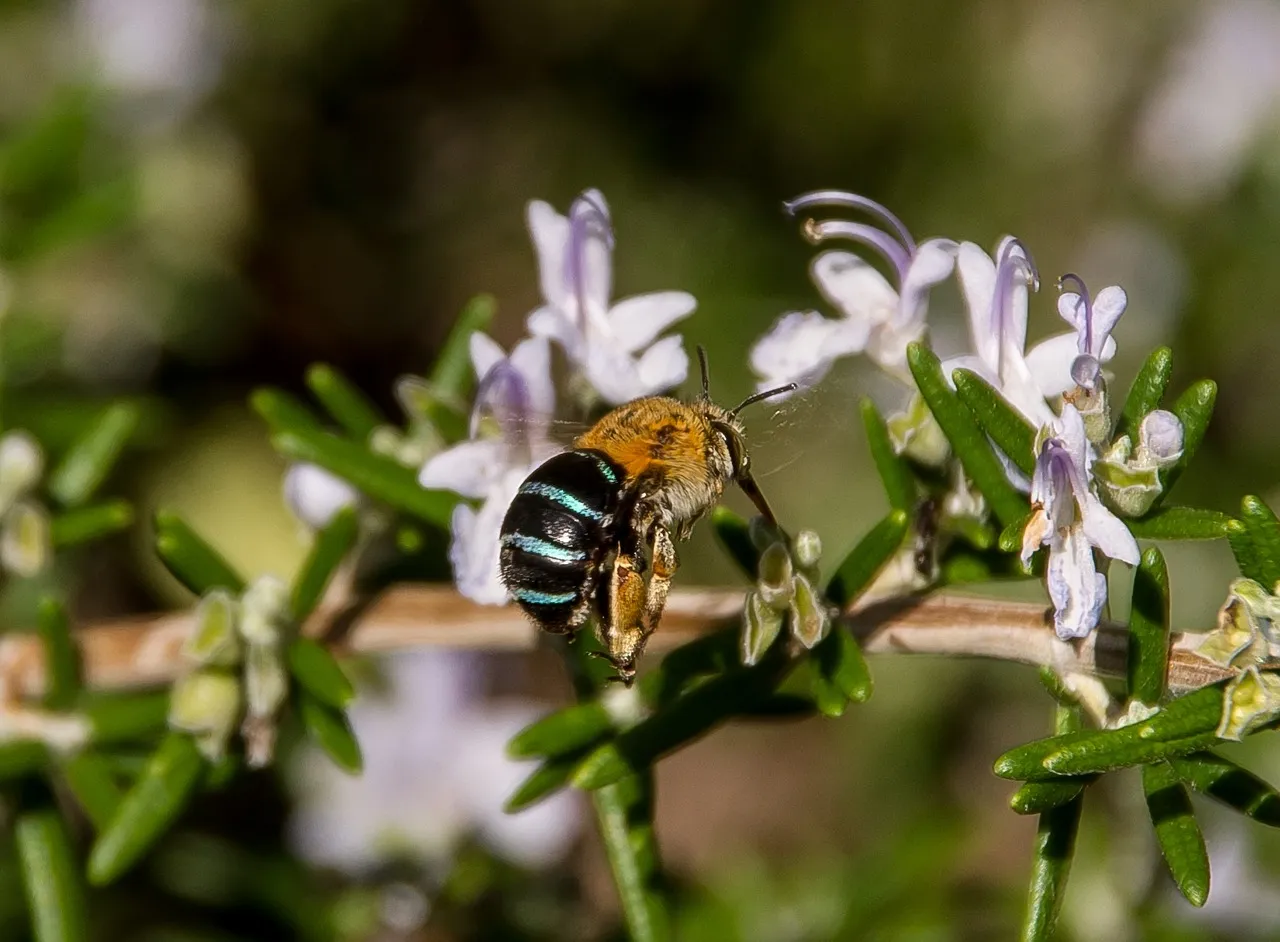
Some native bees use a technique called buzz pollination, which certain native flowering plants require. The blue-banded bee curls around a flower’s anther and vibrates to shake the pollen free; honey bees cannot do this. The Museum adds that some wild flowers have suffered from the presence of honey bees, because only native bees can pollinate them.
Native bees and varroa
The national outbreak page says Australian native bees are not affected by varroa mite, which attacks European honey bees and the Asian honey bee. In Queensland, native beehives do not need to be registered. For honey bee keepers, see varroa mite and beekeepers.
Do native bees sting?
Females of most species can. Stingless bees have no sting at all; the females of all the other native bees have one, but many are too small to deliver an effective dose of venom to people. The largest species, though not aggressive, can deliver a painful sting.
healthdirect notes that stings from native Australian bees can also cause an allergic reaction. Its first-aid steps are on stings and allergic reactions.